
Accessible Exercise, Strength and Body Composition: A Guide for People with Disabilities
Movement, Strength and Wellbeing: Finding an Approach That Works for You
Physical activity can play an important role in supporting strength, mobility, everyday function and general wellbeing. However, traditional fitness advice does not always reflect the experiences, needs or abilities of people living with disabilities.
For some people, exercise may involve walking, swimming or resistance training. For others, it may mean seated movements, wheelchair-based activities, supported stretching or rehabilitation exercises recommended by a healthcare professional.
No single approach works for everyone.
At Lipo 360, we believe conversations about physical wellbeing and body composition should be inclusive, realistic and centred on individual needs rather than appearance or weight alone.
This guide explores accessible exercise options, the importance of muscle strength, factors that influence body composition, and ways to approach physical activity safely and comfortably.
Understanding Disability and Physical Activity

Disability is a broad term that covers many different physical, sensory, neurological, cognitive, and long-term health conditions.
Some disabilities affect mobility, coordination, balance or muscle function. Others may involve chronic pain, fatigue, sensory differences or symptoms that fluctuate from day to day.
Not all disabilities are visible, and two people with the same diagnosis may have very different experiences of physical activity.
Barriers to exercise can also be environmental rather than physical. Inaccessible facilities, unsuitable equipment, transport difficulties, cost and a lack of appropriately trained instructors can all limit opportunities to participate.
Accessible exercise means recognising these differences and offering options that let people take part in ways that suit them.
The aim should not be to achieve a particular body shape or fitness standard. Instead, people can approach physical activity to support individual goals, whether that means maintaining strength, enjoying movement, supporting daily activities, or participating in a favourite sport.
What Are the Benefits of Accessible Exercise?
When appropriate for an individual’s health and circumstances, regular physical activity may offer several benefits.
These can include:
- Supporting muscle strength and endurance.
- Helping maintain joint mobility and flexibility.
- Supporting cardiovascular health.
- Contributing to bone health where appropriate.
- Supporting balance, coordination and everyday movement.
- Promoting psychological wellbeing.
- Providing opportunities for social interaction and enjoyment.
The benefits experienced will vary depending on the activity, disability, underlying health conditions and individual circumstances.
For some people, maintaining existing physical function may be a meaningful goal. For others, participation, enjoyment, or reducing periods of inactivity may matter more.
Exercise doesn’t need to be strenuous or involve standing, walking, or traditional gym equipment to be worthwhile.
Accessible Exercise Options for Different Abilities
Many ways to adapt physical activity can accommodate different mobility levels, abilities, and preferences.
The following examples are general information rather than individual exercise prescriptions.
1. Seated Exercises
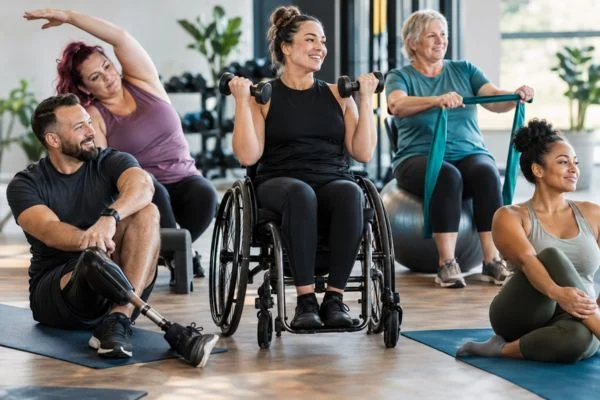
Seated exercise can provide an alternative for people who use wheelchairs, have balance difficulties, or prefer activities that don’t require standing.
Depending on individual ability, examples may include:
- Seated arm raises.
- Gentle shoulder movements.
- Resistance-band exercises.
- Seated marching or leg movements where possible.
- Supported upper-body stretches.
- Seated boxing-inspired movements.
Some exercises may help maintain mobility or build strength, while others may provide gentle cardiovascular activity.
Wheelchair users should ensure their chair is stable and appropriately positioned before exercising. Anyone with reduced sensation, joint instability or other relevant medical considerations may need professional guidance on safe positioning and movement.
2. Wheelchair-Based Physical Activity
Wheelchair users can participate in a wide variety of physical activities, depending on their interests, equipment and individual abilities.
Options may include wheelchair basketball, adapted tennis, wheelchair racing, resistance training and accessible fitness classes.
Some people may prefer recreational activities rather than organised sports.
Upper-body strengthening may help certain wheelchair users, particularly when arm strength supports everyday activities. However, repetitive movements and transfers can place considerable demands on the shoulders.
An appropriately qualified physiotherapist or exercise professional can help identify suitable activities and ways to manage these demands.
3. Resistance and Strength Training
Strength training involves working muscles against resistance.
Depending on individual ability, this might include resistance bands, light weights, adapted gym machines or carefully selected bodyweight exercises.
Potential benefits include supporting muscle function, strength and the ability to perform everyday activities.
For example, an individual may want to build strength to support transfers, wheelchair propulsion, or other personally meaningful activities.
However, adapt exercises to individual needs. Some neurological, musculoskeletal or long-term health conditions require specialist consideration.
Strength training should not be assumed to be appropriate for every muscle group or disability without assessment.
4. Water-Based Exercise
Swimming, hydrotherapy and other water-based activities may provide enjoyable movement opportunities for some people with disabilities.
Water can support the body and reduce weight-bearing demands during certain movements.
Activities might include supported swimming, gentle water-based mobility exercises or professionally supervised hydrotherapy.
Consider accessibility, water temperature, fatigue, medical conditions, and the availability of appropriate assistance.
A suitably qualified healthcare professional should guide hydrotherapy used as part of rehabilitation.
5. Gentle Movement, Stretching and Adapted Yoga
Some people may benefit from gentle movement activities focused on comfort, flexibility, breathing and relaxation.
Adapted yoga, seated stretching, and supported mobility exercises can sometimes be modified to suit different abilities.
However, stretching is not suitable for every joint or condition, particularly where there is instability, significant spasticity, pain or a risk of injury.
Movements should stay within an appropriate, comfortable range, and seek assistance when needed.
Understanding Body Composition
Body composition describes the different tissues that make up the body, including:
- Muscle
- Fat
- Bone
- Water
- Other organs and tissues
Unlike body weight alone, body composition considers more than a single number on the scales.
However, body composition measurements also have limitations and should not be treated as a complete indicator of health.
For people with disabilities, body composition can be influenced by several factors, including mobility, muscle use, medication, age, underlying health conditions and changes in physical activity.
For example, someone who uses a particular limb less may experience changes in muscle mass over time.
Other individuals may experience changes in body composition associated with long-term health conditions or medication.
These changes do not automatically indicate poor health, and not everyone needs to monitor or change their body composition.
Why Traditional Body Composition Measurements May Not Be Suitable for Everyone
Common measurements such as Body Mass Index (BMI) do not directly measure muscle mass or body fat.
BMI can be particularly difficult to interpret in some disabled populations, including individuals with altered muscle mass, limb differences or conditions affecting body proportions.
Some body composition scales also rely on assumptions that may not apply to certain disabilities.
When body composition assessment is clinically relevant, a healthcare professional can help determine whether a measurement method is suitable and how to interpret its results.
Body composition should never be used as the sole measure of someone’s health, fitness or physical capability.
Building and Maintaining Muscle Strength
Muscles play an important role in movement, posture, joint support and many everyday activities.
However, the ways muscles are used can differ significantly between individuals.
Some people may have limited voluntary movement in particular muscle groups, while others may experience muscle weakness, spasticity, fatigue or fluctuating strength.
An appropriate strength programme may focus on maintaining existing function, improving specific movements or supporting participation in daily activities.
It may involve:
- Gradually increasing suitable resistance.
- Practising functional movements.
- Working on posture and positioning.
- Developing endurance for everyday tasks.
- Using adapted equipment.
- Allowing sufficient recovery between sessions.
Not everyone will experience increased strength or muscle growth in response to exercise, particularly when neurological or muscular conditions affect the body’s response.
Goals should therefore be realistic, individual and guided by the person’s preferences and clinical circumstances.
The Importance of Nutrition and Hydration
Nutrition can support muscle maintenance, energy availability, and overall health.
A balanced diet generally includes appropriate amounts of protein, carbohydrates, fats, vitamins, minerals and fluids.
Protein supports muscle maintenance and growth, although individual requirements can vary.
Some people with disabilities may have additional nutritional considerations, such as swallowing difficulties, gastrointestinal symptoms, medication interactions or altered energy requirements.
Where appropriate, a registered dietitian can provide personalised advice.
Hydration is also important, particularly during physical activity, but fluid requirements and restrictions may vary according to medical circumstances.
There is no universal diet or supplement programme that is suitable for everyone with a disability.
Managing Fatigue, Pain and Recovery
Fatigue can be a significant consideration for people living with certain disabilities or long-term health conditions.
It may differ from ordinary tiredness and may not always improve with rest.
For some individuals, physical exertion can cause a delayed worsening of symptoms, sometimes described as post-exertional malaise.
In these circumstances, standard advice to gradually increase exercise may be inappropriate or harmful.
Activity should be planned around individual symptoms, energy availability and relevant clinical guidance.
Useful considerations may include allowing recovery time, adapting activity duration, using appropriate equipment, and recognising early signs of discomfort or fatigue.
Do not treat pain as something you must push through to achieve fitness goals.
If movement causes new pain, worsening symptoms, dizziness, unusual breathlessness, or other concerning changes, stop the activity and seek appropriate medical advice.
Can Muscle Stimulation Be Used Alongside Exercise?
Muscle stimulation technologies are sometimes discussed in relation to muscle activation and physical conditioning.
However, it is important to distinguish between different types of technology and their intended uses.
Neuromuscular electrical stimulation (NMES) may be used in certain clinical rehabilitation settings under professional supervision.
Other technologies, including high-intensity electromagnetic muscle stimulation (HIEMT), are marketed for non-surgical body contouring or muscle conditioning.
These technologies are not interchangeable, and evidence supporting one type of stimulation does not automatically apply to another.
At Lipo 360, we offer consultation-led non-surgical treatments, including HIEMT muscle stimulation, where appropriate.
However, HIEMT is not a replacement for physiotherapy, rehabilitation, medical treatment or an individually adapted exercise programme.
There is insufficient evidence to assume that cosmetic HIEMT treatments are suitable or beneficial for people with particular disabilities, neurological conditions or significant muscle impairment.
Suitability depends on the specific technology, manufacturer’s contraindications, medical history and individual circumstances.
Some implanted medical devices, including certain pacemakers and other electronic implants, may make electromagnetic stimulation unsuitable.
We would not recommend a treatment where safety or suitability is uncertain, and medical clearance may be necessary.
Creating an Accessible Movement Routine
Build an accessible movement routine around the individual, not a standard fitness programme.
Before starting, consider which activities are enjoyable, which movements are comfortable, and whether particular symptoms or environmental barriers need to be accommodated.
For some people, this may mean attending an accessible gym or joining an adapted sports club.
For others, it could involve short periods of seated movement at home or following a physiotherapist’s prescribed programme.
A suitable routine may combine movement, strengthening activities, and rest, depending on individual needs.
You don’t need to follow the same frequency, duration, or intensity as someone else.
Setting Meaningful Goals
Goals can reflect personal priorities rather than weight or appearance.
Examples might include feeling more confident participating in an activity, maintaining an existing movement, improving comfort during everyday tasks, or finding an enjoyable form of exercise.
Progress may not be linear, and maintaining current abilities can be a positive outcome.
For people with progressive or fluctuating conditions, goals may need to change over time.
When Should You Seek Professional Advice?
It may be helpful to speak with a GP, physiotherapist, occupational therapist or appropriately qualified exercise professional before beginning a new activity programme, particularly if you have complex medical needs or are uncertain about safety.
Professional assessment is especially important where there are concerns involving:
- Significant muscle weakness or loss of function.
- Uncontrolled pain or joint instability.
- Cardiovascular or respiratory conditions.
- Autonomic dysfunction.
- Severe fatigue or post-exertional symptom worsening.
- Recent surgery or injury.
- Conditions affecting sensation, balance or temperature regulation.
For people with spinal cord injuries, additional considerations may include pressure injury prevention, autonomic dysreflexia, thermoregulation and safe positioning.
Appropriate professional advice can help ensure activity choices are tailored to the individual.
How Lipo 360 Approaches Individual Suitability
At Lipo 360, we recognise that people have different physical abilities, health considerations and personal goals.
Our non-surgical body treatments are consultation-led, and we assess suitability on an individual basis.
We do not assume that a treatment is appropriate simply because someone has expressed an interest in body composition, muscle conditioning or physical wellbeing.
For individuals living with disabilities or complex medical conditions, we may require additional information or advice from a healthcare professional before considering any treatment.
Our treatments are not designed to diagnose or manage disabilities, restore lost physical function or replace medical rehabilitation.
Where a treatment is considered suitable, we explain relevant limitations, potential risks and realistic expectations.
Results vary, and we can’t guarantee any particular physical or cosmetic outcome.
Frequently Asked Questions
Can people with disabilities benefit from strength training?
Some people with disabilities may benefit from strength training that is appropriately adapted. Potential benefits depend on the individual’s condition, muscle function and personal goals. Professional guidance may be needed to identify suitable exercises.
Is seated exercise effective?
Seated activities can provide opportunities for movement, strengthening, and cardiovascular activity, depending on the exercises and the individual’s ability. Consider effectiveness in relation to personal goals rather than comparing it with standing exercise.
Do people with disabilities need to focus on weight loss?
No. Disability does not automatically require weight loss. Physical activity can support many aspects of wellbeing without changing body weight.
Can body composition change when mobility is limited?
Yes. Muscle mass and fat distribution may change because of reduced movement, altered muscle use, medication, age, or underlying health conditions. These changes vary considerably and do not necessarily require cosmetic intervention.
Is HIEMT suitable for wheelchair users?
Wheelchair use alone does not establish whether HIEMT is safe or appropriate. Suitability depends on the underlying medical circumstances, implanted devices, treatment area and equipment contraindications. Limited evidence specifically supports cosmetic HIEMT for wheelchair users, so individual assessment and potential medical advice are important.
Can muscle stimulation replace physiotherapy?
No. Cosmetic muscle stimulation treatments should not be presented as substitutes for physiotherapy, rehabilitation or medical management.
Final Thoughts: Movement Should Be Inclusive
Physical activity is not about achieving a particular body shape, reaching a number on the scales or meeting someone else’s definition of fitness.
For people living with disabilities, accessible movement can take many different forms, and individual preferences, health needs and circumstances should always be respected.
Strength, mobility, body composition and wellbeing are complex subjects. No single approach suits everyone.
Whether the goal is to maintain existing abilities, enjoy adapted physical activity, or explore ways to support general wellbeing, the best starting point prioritises accessibility, comfort, safety, and personal choice.
Speak to Lipo 360 About Treatment Suitability
If you are interested in learning more about the non-surgical treatments available through Lipo 360, our team can discuss your individual circumstances and explain whether an assessment may be appropriate.
Our mobile treatment service operates in selected UK locations, subject to availability and suitability.
Book a Consultation | Request a Call Back
All treatments are subject to consultation, medical history and individual suitability. Treatments are not substitutes for medical care, physiotherapy or rehabilitation. Results vary, and treatment may not be appropriate for everyone.